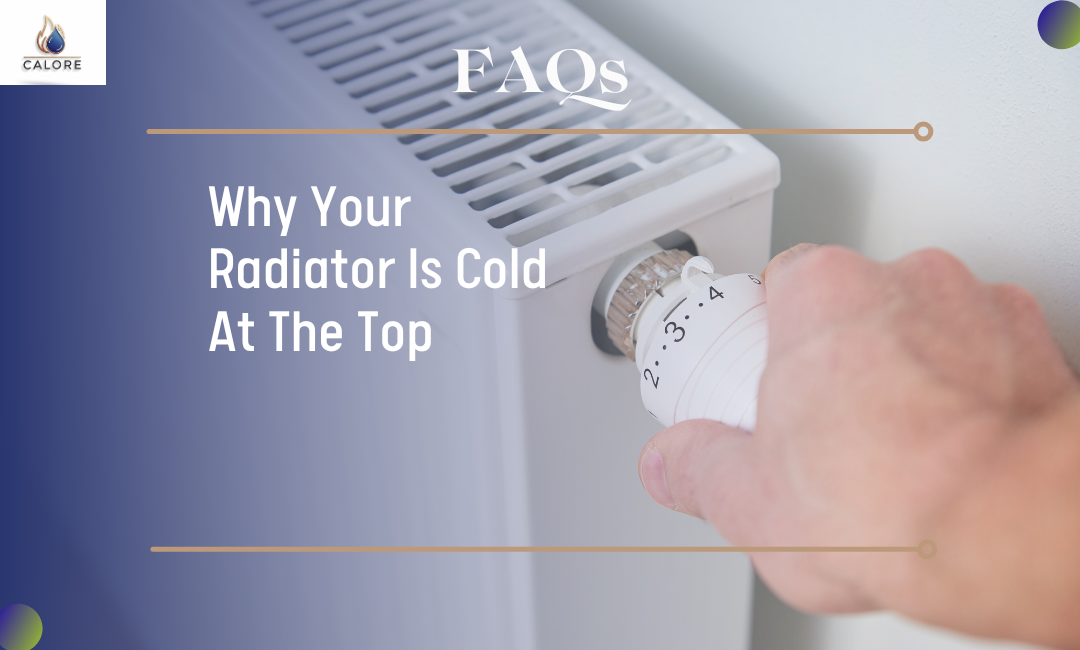
Cold spots on a radiator are a common issue in Edinburgh homes and usually follow clear patterns. Where the radiator feels cold often points to what is happening inside the heating system.
In older properties, including tenement flats, these problems can be more noticeable, especially during winter cold snaps when heating systems are working harder.
Below we explain what different cold spots usually mean, what you can safely check, and when it is best to call a heating engineer.
What causes a radiator to be cold at the top
When a radiator is warm at the bottom but cold at the top, trapped air is almost always the reason. Air rises within the system and collects at the highest point, preventing hot water from circulating fully.
This is common in Edinburgh and the Lothians after summer shutdowns, boiler pressure changes, or during winter cold snaps when heating systems are pushed harder. Older pipework, particularly in tenement flats, can make air build up more noticeable.
Safe checks before doing anything else
First, check that the radiator valve is fully open. If it has a thermostatic valve, turn it up and give it a few minutes. Also look at other radiators in the home. If several are affected, the issue may be system wide rather than one radiator.
Bleeding the radiator properly
Turn the heating off and allow the radiator to cool slightly. Place a cloth under the bleed valve at the top and slowly open it using a radiator key. You should hear air escape. When the hissing stops and water flows steadily, close the valve firmly.
After bleeding, always check your boiler pressure. If pressure drops too low, the heating may not run correctly until it is topped up.
If you are unsure at this stage, a local heating engineer can check pressure and circulation safely. Our Heating Services team covers Edinburgh and the Lothians and can advise clearly with fixed price quotes.
When bleeding does not solve the problem
If the radiator stays cold at the top, or you need to bleed radiators frequently, there may be an underlying issue. This can include system imbalance, circulation problems, or small air leaks drawing air back in.
It is also worth comparing symptoms with other issues, such as when a radiator is cold at the bottom, which points to a different cause.
When to call a professional
If pressure keeps dropping, multiple radiators are affected, or bleeding no longer works, it is time for a proper inspection rather than trial and error.
Calore helps homeowners across Edinburgh and the Lothians with clear communication, experienced engineers, and fixed price quotes, so you know exactly where you stand before any work begins.